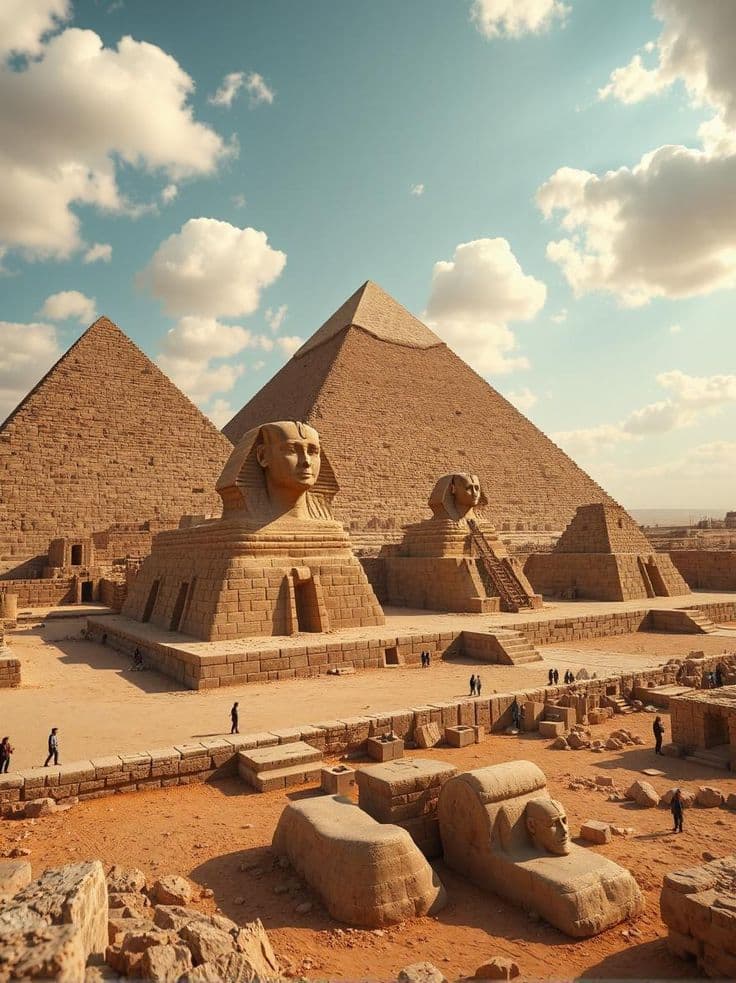
The Pyramids of Egypt, located on the Giza Plateau near Cairo, are one of the most iconic and enduring symbols of ancient civilization. Built more than 4,500 years ago, these monumental structures were constructed as royal tombs for pharaohs of the Old Kingdom. The most famous of them all is the Great Pyramid of Giza, built for Pharaoh Khufu, and it remains the only surviving wonder of the Seven Wonders of the Ancient World.
What makes the pyramids truly remarkable is not only their size, but also the precision and skill used in their construction. Millions of massive limestone blocks were carefully cut, transported, and assembled with extraordinary accuracy—without the use of modern machinery. This has led historians and researchers to study and debate the methods used by ancient Egyptians for centuries.
Beyond their architectural brilliance, the pyramids held deep religious and spiritual meaning. The ancient Egyptians believed in life after death, and the pyramids were designed to help the pharaoh’s soul ascend to the heavens and live forever. Surrounding the pyramids are temples, smaller pyramids, and the Great Sphinx, adding to the mystery and grandeur of the site.
Today, the pyramids are a major tourist attraction and a powerful reminder of human creativity and ambition. They continue to inspire awe, raise questions, and connect us to a civilization that shaped much of human history.