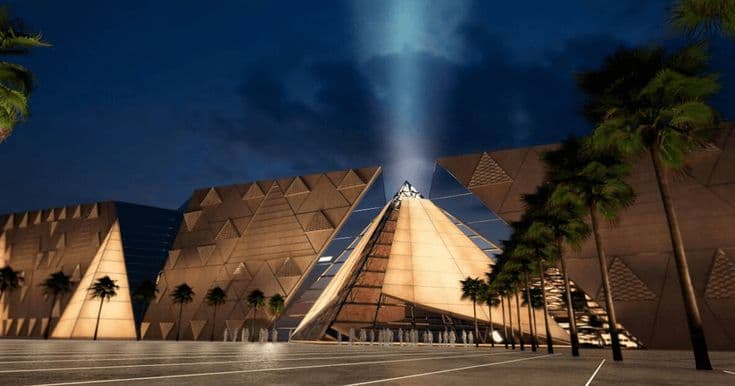
The Grand Egyptian Museum (GEM) is a global cultural landmark located near the Giza Pyramids. Designed to be the largest archaeological museum in the world dedicated to a single civilization, it represents a bridge between Egypt’s glorious past and its ambitious future.
One of the most remarkable features of the Grand Egyptian Museum is its strategic location. Standing just a few kilometers away from the Great Pyramids, the museum offers visitors a unique visual and historical connection between the ancient monuments and the artifacts displayed inside. The museum’s modern architectural design blends glass, stone, and light, symbolizing openness and continuity.
Inside the museum, visitors can explore thousands of artifacts spanning thousands of years of Egyptian history, from prehistoric times to the Greco-Roman period. A major highlight is the complete collection of King Tutankhamun’s treasures, displayed together for the first time in history. These items provide deep insight into royal life, beliefs about the afterlife, and ancient Egyptian craftsmanship.
The Grand Egyptian Museum is not just about displaying artifacts; it is also an educational and cultural center. It includes conservation laboratories, research facilities, interactive exhibitions, and digital experiences that make history engaging for all ages. This modern approach helps younger generations connect with their heritage in meaningful ways.
In addition, the museum plays an important role in boosting tourism and cultural awareness. It strengthens Egypt’s position as a global center for history and archaeology, while also contributing to the economy and international cultural exchange.
The Grand Egyptian Museum is more than a museum—it is a celebration of human civilization, creativity, and the timeless legacy of ancient Egypt.